What Do You Teach a Kid When Nobody Knows the Future?
Four things that matter and how we train them
Ankush has bought Claude subscriptions for both his children. One is eleven, the other is nine.
He gives them tasks to do with it. Plan the itinerary for a trip. Find out why a cube is called a cube.
Near the end of our call, I asked him his thoughts on education for his kids in an AI-native world.
“School boards are static.”His kids will “need to be adaptable.”“Mundane work is going to be made redundant,” he said.
He's concerned about his kids' future because he doesn't know what it holds for them. Of all the parents I have spoken to in the last few weeks, he is thinking and doing the most. And even he is worried. He still has no idea what jobs his children will have.
And that is absolutely OK. We are at an inflection point in history. Nobody knows what work will look like in 2040.
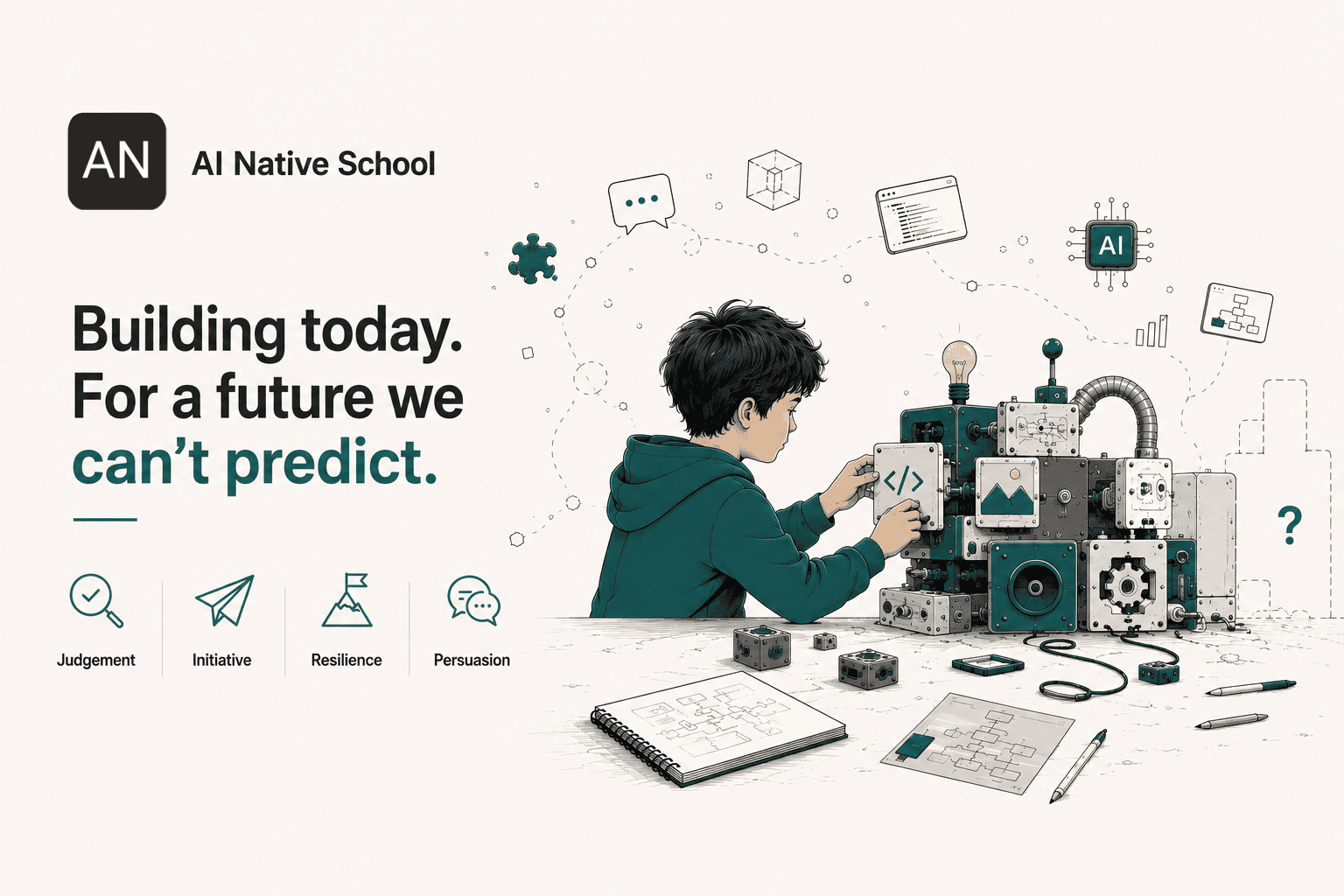
But we think these four things will matter regardless.
The Skills For The Future
Beyond "how to use AI," there's a world where people with a specific set of skills will flourish. They are:
1. Judgement - do they check?
AI answers with the same confidence whether it’s right or wrong. What does your child do with that answer?
Call it taste, call it discernment, call it critical thinking. The ability to look at what AI hands you and know how to make it better - this is your moat. It is what stands one person apart from the rest.
2. Initiative - do they start?
The era of the one-person company is starting to look like a real possibility. In that world, what matters is whether you fix the thing you see broken, or wait for someone to assign it to you. Fourteen years of school trains a child to wait for the assignment. It is very hard to un-train, and it is the single biggest predictor of who gets anything finished.
3. Resilience - what do they do when it breaks?
It always breaks.
A parent told me his daughter quit chess after losing a tournament. For a young child who has not been taught how to deal with losing, that is a fair response.
But we want to change that. Resilience is a trainable skill, and training it is the aim.
4. Persuasion - can they get anyone to care?
They’ve made a thing. Can they get one other person - someone who isn’t their parent - to use it?
The time and money it takes to build something has fallen dramatically. So the question stops being can you build it and becomes can you convince anyone it’s worth having.
How We Address This
AI Native School is a course that combines building with AI and thinking in the age of AI.
Your child picks something they want to fix. They build an app for it using AI. It goes on the internet with a link they can send anyone.
AI writes the code. Your kid makes the calls. And we teach them the thinking tools to make those calls.
We’re just getting started, and we’ll share more about the course in future posts.
Ankush wants his kids to be adaptable. I can’t sell him adaptability. I can sell him a course that teaches his child how to thrive under uncertainty.
Before Any of That
There’s an assessment first. It takes about forty minutes, and your child does it in one sitting. We call it the Thinking Profile.
It tests the four skills that we mentioned above - judgement, initiative, resilience, and persuasion.
It’s a first version. It won’t diagnose your child, and we won’t pretend it can. But it will give you an indication of what their instincts are right now.
Find out. The Thinking Profile is at ainativeschool.org.